Midstream & Infrastructure — From Wellhead to Market
The reactivation of Mobil Fee 6 and Mobil Fee 4 is underpinned by a pragmatic midstream strategy that connects proven South Texas gas to reliable sales points through gathering, compression, and pipeline infrastructure.
The objective is simple: move gas safely, reliably, and cost-effectively from seven reservoirs on a 643-acre lease to market, while preserving uptime and protecting the project’s economics.
Midstream Strategy Overview
Safari Production Company, Inc. approaches midstream and infrastructure as a critical value chain, not an afterthought. The program is structured around leveraging existing routes where economic, while upgrading key elements to modern standards for safety, reliability, and measurement.
- Gathering of production from Mobil Fee 6 and Mobil Fee 4 into centralized facilities.
- Compression and dehydration configuration aligned with forecast volumes.
- Sales connections into established pipeline systems and commercial outlets.
- Design choices that support both early cash flow and long-life production.
Detailed midstream schematics, third-party contracts, and infrastructure due diligence are available in the technical appendices and via the Document Library / Data Room.
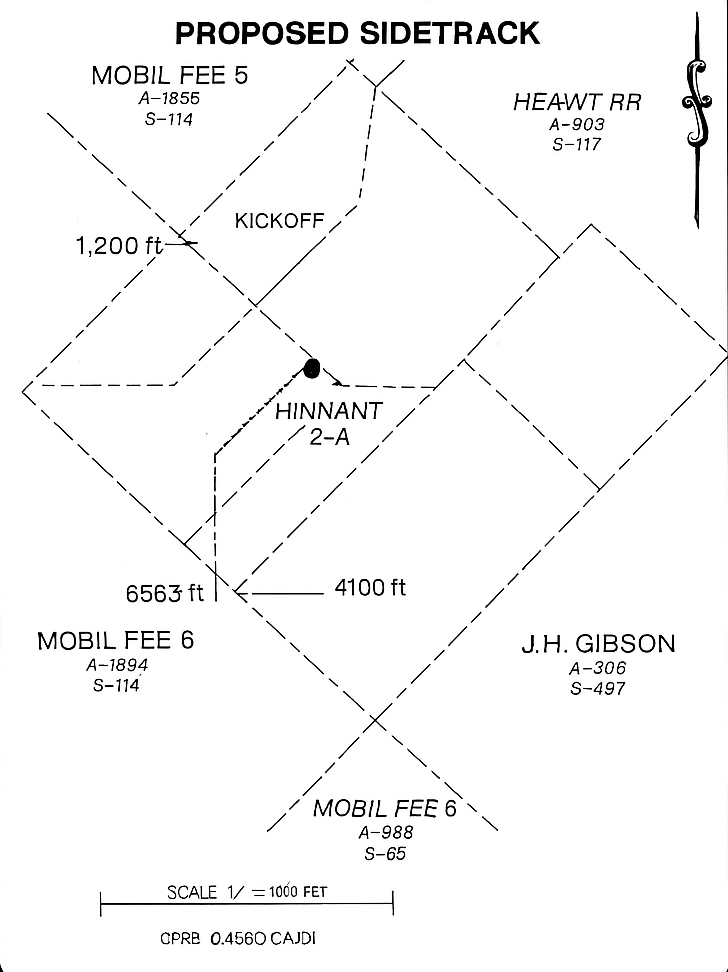
Proposed sidetrack layout illustrating lease boundaries, kickoff point, Hinnant 2-A, and positional relationships between Mobil Fee 5 and Mobil Fee 6.
Gathering and Compression
Gas from Mobil Fee 6 and Mobil Fee 4 is gathered through a practical wellsite and low-pressure line configuration into centralized separation, dehydration, and compression. The design reflects realistic deliverability expectations from both shallow and deep horizons.
- Wellsite gathering from each producing well to central facilities.
- Separation and measurement consistent with sales and reporting standards.
- Compression sized to expected rates with room for optimization.
- Dehydration designed to meet downstream pipeline specifications.
Design envelopes, vendor options, and cost assumptions are explicitly linked to the operating cost line items in the model and sensitivities.
Operational Alignment
- Volume assumptions tied to Mobil Fee 6 and Mobil Fee 4 profiles.
- Compression uptime reflected in production and downtime factors.
- Maintenance strategies integrated into Opex forecasts.
- Scalable configuration to support potential optimization work.
Gathering and compression performance is a key driver of realised volumes and netback pricing.
Pipeline Access and Market Connections
The infrastructure strategy is built around access to established South Texas pipeline systems, enabling sales into liquid regional markets. The target outcome is a clean, auditable line of sight from wellhead volumes to net realized pricing.
- Connection from field facilities into existing pipeline infrastructure where economic.
- Sales point selection based on reliability, tariffs, and netback economics.
- Measurement and allocation procedures aligned with counterparties.
- Contract structures designed to match the production profile and risk appetite.
Commercial terms and pipeline agreements are subject to negotiation, legal review, and counterparty credit assessment as part of the overall commercial workstream.
Commercial Considerations
- Tariff and fuel assumptions embedded in netback price calculations.
- Take-or-pay, interruptible, or firm service options evaluated as appropriate.
- Counterparty quality aligned with investor expectations.
- Flexibility to respond to market price changes and basis differentials.
Pipeline and sales arrangements are directly reflected in realised price decks and the 7-year cash flow profile.
Reliability, Risk, and Contingency Planning
Midstream reliability is central to protecting production volumes and investor returns. The infrastructure and commercial structure are designed to mitigate downtime risk, cost escalation, and operational bottlenecks.
- Contingency budget allocated at the project level for operational variance.
- Maintenance and inspection plans for facilities and critical equipment.
- Operational procedures for curtailment, upset conditions, and restart.
- Commercial options evaluated for alternative offtake or re-routing if needed.
These midstream-related risks and mitigants are addressed in the project risk register and summarized on the Risk Factors page, with further detail in the investment documentation.
Integration with Risk and Economics
- Downtime assumptions reflected in production and cash flow projections.
- Midstream Opex and tariffs embedded in base-case and downside cases.
- Contingency used to offset potential cost over-runs or facility upgrades.
- Linkage to overall project risk disclosures and sensitivity analysis.
Midstream assumptions are transparent and can be interrogated in the detailed model and technical documentation.
Access Detailed Midstream and Infrastructure Data
Investors, lenders, and technical reviewers who require deeper insight into the midstream configuration, facilities design, and commercial arrangements can request access to the full documentation set via the Data Room.
- Infrastructure schematics and gathering/compression layouts.
- Draft commercial structures and representative tariff assumptions.
- Operating cost frameworks linked to facilities and midstream scope.
- Risk registers and mitigation plans specific to midstream exposure.
Access is subject to qualification and a signed NDA. The Safari Production Company, Inc. team will coordinate next steps and provide the appropriate level of detail based on investor requirements.
Next Steps
Request Data Room Access Contact Safari Production Company, Inc. Review Investment TermsThis page is for informational purposes only and does not constitute an offer to sell or a solicitation of an offer to buy any securities. Any offering will be made solely to qualified investors via definitive documentation.